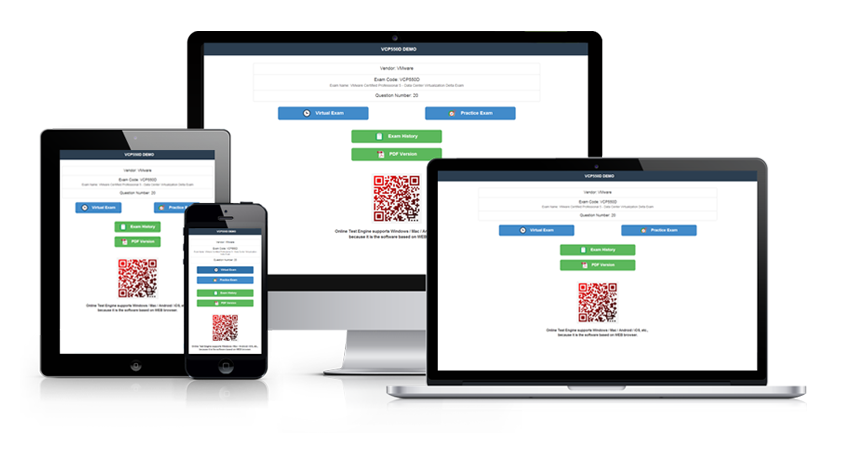
Free Demo


What is the duration, language, and format of PCAP - Certified Associate in Python Programming (PCAP-31-02) Exam
- Type of Questions: Single-choice and multiple-choice questions
- Language of Exam: English
- Passing Score: 70%
- Duration of Exam: 65 minutes + 10 minutes(Non-Disclosure Agreement/Tutorial)
- Number of Questions: 40
Python Institute PCAP-31-02 Exam Syllabus Topics:
| Topic | Details |
|---|---|
| Topic 1 |
|
| Topic 2 |
|
| Topic 3 |
|
| Topic 4 |
|
Reference: https://pythoninstitute.org/certification/pcap-certification-associate/
PCAP - Certified Associate in Python Programming (PCAP-31-02) Exam Certified Professional salary
The estimated average salary of PCAP - Certified Associate in Python Programming (PCAP-31-02) professional is listed below:
- Europe: 70,000 EURO
- England: 70,600 POUND
- United States: 120,000 USD
- India: 20,40,000 INR
Our website devote themselves for years to develop the Python Institute Certified Associate in Python Programming exam pdf materials to help more people who want to have a better development in IT field to pass Certified Associate in Python Programming real exam. Although there are so many exam materials about Certified Associate in Python Programming braindumps2go vce, the Python Institute PCAP Certified Associate in Python Programming exam prep developed by our professionals is the most reliable study materials. Practice has proved that almost all those who have used our Certified Associate in Python Programming exam dumps have successfully passed the Certified Associate in Python Programming real exam. Many of them just use spare time preparing for Certified Associate in Python Programming valid braindumps and passed the certificated exam finally.

We provide the latest Certified Associate in Python Programming exam pdf for IT professionals to participate in PCAP-31-02 Certified Associate in Python Programming real exam and help them get certification quickly. All questions and answers of Certified Associate in Python Programming practice exam are written by our experienced experts' extensive experience and expertise. Besides, to keep the accuracy of Certified Associate in Python Programming exam questions, our colleagues always keep the updating of our Python Institute Certified Associate in Python Programming valid braindumps. What we provide covers almost 86% questions of the Certified Associate in Python Programming braindumps2go vce. When you select our Certified Associate in Python Programming exam dumps, you are sure to pass the actual test at your first attempt.
Our Certified Associate in Python Programming exam prep is prepared for people who participate in the PCAP-31-02 Certified Associate in Python Programming real exam and want to pass exam quickly. Our training materials include not only Certified Associate in Python Programming practice exam which can consolidate your expertise, but also high degree of accuracy of Certified Associate in Python Programming exam questions and answers. We can guarantee you pass Certified Associate in Python Programming valid braindumps exam with high passing score even if you attend the exam in your first time.
Our valid Certified Associate in Python Programming exam pdf can test your knowledge and evaluate your performance when you prepare for our Certified Associate in Python Programming practice exam and study materials. The Certified Associate in Python Programming exam dumps are the result of our experienced IT experts with constant explorations, practice and research for many years. If you have any concerns about our Certified Associate in Python Programming exam prep, you can first try the free demo of our Certified Associate in Python Programming exam questions, and then make a decision whether to choose our Certified Associate in Python Programming braindumps2go vce as your training materials.
You will be enjoying the right of free update Certified Associate in Python Programming valid braindumps one-year after you purchased. There are 24/7 customer assisting to support you when you have any questions about our Certified Associate in Python Programming exam pdf. The most important is that we promise you full refund if you failed the exam with our Certified Associate in Python Programming braindumps2go vce. Please feel free to contact us if you have any questions.
Instant Download: Upon successful payment, Our systems will automatically send the product you have purchased to your mailbox by email. (If not received within 12 hours, please contact us. Note: don't forget to check your spam.)
Topics of PCAP - Certified Associate in Python Programming (PCAP-31-02) Exam
The syllabus for the PCAP - Certified Associate in Python Programming (PCAP-31-02) examination is listed below in detail of each section and their topics:
1. Control and Evaluations (25%)
Objectives covered by this section:
- operators: unary and binary, priorities and binding
- simple lists: constructing vectors, indexing and slicing, the len() function
- basic concepts: interpreting and the interpreter, compilation and the compiler, language elements, lexis, syntax and semantics, Python keywords, instructions, indenting
- bitwise operators: ~ & ^ | « »
- building loops: while, for, range(), in, iterating through sequences
- literals: Boolean, integer, floating-point numbers, scientific notation, strings
- simple strings: constructing, assigning, indexing, slicing comparing, immutability
- the pass instruction
- basic input and output: input(), print(), int(), float(), str() functions
- Boolean operators: not and or
- controlling loop execution: break, continue
- conditional statements: if, if-else, if-elif, if-elif-else
- expanding loops: while-else, for-else, nesting loops and conditional statements
- formatting print() output with end= and sep= arguments
- relational operators ( == != > >= < <= ), building complex Boolean expressions
- assignments and shortcut operators
- accuracy of floating-point numbers
- numeric operators: * / % // + -
- string operators: * +
2. Data Aggregates (25%)
Objectives covered by this section:
- strings in detail: ASCII, UNICODE, UTF-8, immutability, escaping using the \ character, quotes and apostrophes inside strings, multiline strings, copying vs. cloning, advanced slicing, string vs. string, string vs. non-string, basic string methods (upper(), lower(), isxxx(), capitalize(), split(), join(), etc.) and functions (len(), chr(), ord()), escape characters
- lists in detail: indexing, slicing, basic methods (append(), insert(), index()) and functions (len(), sorted(), etc.), del instruction, iterating lists with the for loop, initializing, in and not in operators, list comprehension, copying and cloning
- dictionaries: building, indexing, adding and removing keys, iterating through dictionaries as well as their keys and values, checking key existence, keys(), items() and values() methods
- tuples vs. lists: similarities and differences, lists inside tuples and tuples inside lists
- tuples: indexing, slicing, building, immutability
- lists in lists: matrices and cubes
3. Functions and Modules (25%)
Objectives covered by this section:
- hiding module entities
- defining and invoking your own functions and generators
- import directives, qualifying entities with module names, initializing modules
- the if operator
- return and yield keywords, returning results, the None keyword, recursion
- map(), filter(), reduce(), reversed(), sorted() functions and the sort() method
- writing and using modules, the name variable
- name scopes, name hiding (shadowing), the global keyword
- parameters vs. arguments, positional keyword and mixed argument passing, default parameter values
- converting generator objects into lists using the list() function
- Python hashbangs, using multiline strings as module documentation
- lambda functions, defining and using
- pyc file creation and usage
- constructing and distributing packages, packages vs. directories, the role of the init.py file
4. Classes, Objects, and Exceptions (25%)
Objectives covered by this section:
- the init method
- name mangling
- hasattr(), type(), issubclass(), isinstance(), super() functions
- inheritance and overriding, finding class/object components
- adding your own exceptions to an existing hierarchy
- input/output basics: opening files with the open() function, stream objects, binary vs. text files, newline character translation, reading and writing files, bytearray objects
- class methods: defining and using, the self parameter meaning and usage
- introspection: dict, name, module, bases properties, examining class/object structure
- read(), readinto(), readline(), write(), close() methods
- class attributes: class variables and instance variables, defining, adding and removing attributes, explicit constructor invocation
- defining your own classes, superclasses, subclasses, inheritance, searching for missing class components, creating objects
- invoking methods, passing and using the self argument/parameter
- assertions
- writing and using constructors
- single inheritance vs. multiple inheritance
- the anatomy of an exception object
- the try-except-else-finally block, the raise statement, the except-as variant
- exceptions hierarchy, assigning more than one exception to one except branch
- the role of the str method
- using predefined exceptions and defining your own ones